https://arab.news/8wkfr
CAIRO: Sales, technology, sustainability, are amongst the most booming hiring sectors in Saudi Arabia, newly-released LinkedIn data has revealed.
The research showed that green concerns are playing a role in the recruitment practices of companies, with environmental manager being the fastest-growing scouted job title in the Kingdom.
Back-end developer, sales representative, and human resources operations specialist also made the top ten list.
As well as the focus on environmentalism, bolstering companies’ security arrangements are also evident in the hiring practices with security operations center analysts and cyber security managers being in the top 10, as well as the more traditional security guard roles.
Dental assistants, talent acquisition specialists, and contract specialists were also listed.
“The increasing demand for tech roles reflects the ongoing digital transformation and the growing emphasis on data and automation in the region. Four out of the top 10 roles in Saudi Arabia were those in the cybersecurity, data analysis and software development domains,” said LinkedIn in a press release, adding that HR and talent acquisition roles show a focus on attracting new talent to the country.
In the UAE, sales jobs were top of the list with commercial sales representative as the fastest growing job.
Filing clerk was second, followed by front-end developer, telesales specialist, and real estate agent.
Blockchain developers were also in demand along with aircraft mechanics, immigration consultants and customer success managers.
LinkedIn said the data showed the remote roles are on the rise again in the region, with the UAE showing a month-on-month growth in these postings of 27.7 percent in December – a figure that is one of the highest among the European, Middle Eastern, and African markets such as the UK, down 1.6 percent, Germany, down 10.5 percent, and France, down 21.6 percent.
“Hiring in the UAE slowed during December 2022, with a 10.1 percent decrease in hiring compared to the same month the year before, which saw a significant post-pandemic hiring surge. Nevertheless, hiring in December 2022 was still significantly higher than it was in 2020 – 37.1 percent,” added the press release.
LONDON: Reforms are needed to rapidly modernize pension schemes in the Middle East to reflect the region’s demographics using technology pension products that are modern, contemporary, engaging and efficient to run, according to a UK-based expert.
There are a number of “themes” that flow through pensions within the region, according to Tim Phillips, managing director of Middle East and Asia affairs at Smart — a UK-based finTech company specialized in building technology for pension schemes around the world.
“When you have a number of dynamics — such as people living considerably longer — (they combine) to cause what is referred to as a ‘pensions crisis,’” he told Arab News in an exclusive interview.
Phillips said life expectancy has increased significantly over the last 20 years and continues to do so, with people having fewer children than they used to in previous generations, which results in an aging population.
A large percentage of the workforce in the Middle East has no social insurance umbrella and the size of the working-age population in Arab countries has decreased significantly in the last decade, according to the World Bank, with projections it will fall by more than one-quarter by 2060.
“The percentage of people who are in retirement versus in employment is increasing quite significantly, so that naturally causes quite an issue, because the amount of funding that you need to support the people in retirement has to get drastically higher,” Phillips said.
There are two types of pension provision in the region, he explained; public pension funds, which provide pensions for locals, and are “incredibly generous” and well run in some countries. Expatriate workers tend to receive a “gratuity” or “lump sum” when they leave employment.
“Both of those models are areas where there’s been discussion about reform happening (and) both of those models need to be looked at to reform in some way, and it’s happening around the world, it’s not just in the Middle East,” Phillips said.
The Middle East is particularly exposed because of its relative lack of occupational pensions provided by employers, or social security provision provided by the state, so people therefore rely on the third pillar, which is personal savings.
Governments and public pension funds across the region are starting to think about how they need to adapt and modernize to provide better systems for workers, and are looking to learn from successful savings reforms implemented in the UK, Australia and Hong Kong.
Phillips, who is also the vice president of the British Pensions Management Institute, stressed that the region is diverse, not just demographically, and that each country needs to be looked at separately.
“In Egypt, I think something like 60 percent of the population is unbanked, so that becomes a completely different challenge to somewhere like the UAE, where everyone’s a lot more familiar with using their mobile apps to do banking,” he said.
Lebanon has a number of issues, not least of which is the significant depreciation of the currency, which is going to cause difficulties across all financial assets that are held in that currency, he added.
Kuwait has one of the largest public pension funds in the world, and in Saudi Arabia and the UAE there is a growing interest in moving toward the defined-contribution model — a pot based on how much is paid in, which is the trend throughout the West, as well as countries like Hong Kong and Singapore, as opposed to the defined benefit model that is based on your salary and period of employment.
Saudi Arabia’s Vision 2030 is a good example, Phillips said, as it has set specific targets to achieve in the next few years, including to increase household savings from 6 percent to 10 percent of total household income, which would exceed the target set in the UK.
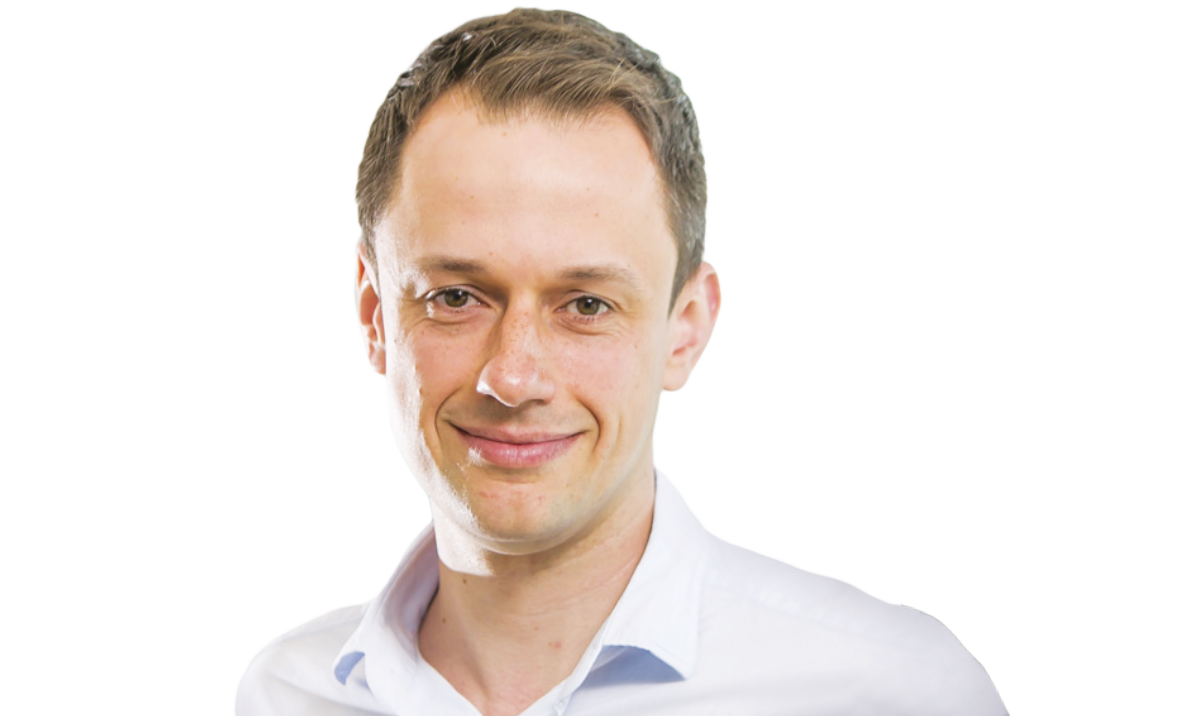
People need to have an adequate income for their retirement, because if they don’t, in the long run, the state will face a high level of poverty.
Tim Phillips, Managing director of Middle East and Asia affairs at Smart
“I think targets like that are fantastic and that’s where I see the journey going for somewhere like the Kingdom of Saudi Arabia over that period and, hopefully, in advance to 2030. And I know a lot of companies will want to support that.
“But ultimately, if you have any large program in which you want to be funding a significant retirement income for a large population of people, you’re not going to be able to do that without some sort of technology being at the center of that, it’s not going to be something you can do manually, which may have been (the case) in the past,” Phillips said.
“So the underlying issue, irrespective of demographic changes or differences, is that people need to have an adequate income for their retirement, because if they don’t, in the long run, the state will face a high level of poverty.”
The pension market is very large, he added, but it has been underserved by technology disruptors as it’s “seen as a not very attractive place to go and innovate,” as opposed to creating another challenger bank.
There’s been quite a lot of competition in the banking industry, with complaints that it is “tired and needs disruption,” but “there hasn’t been as much in the pension space, and that’s where Smart has specialized,” Phillips said.
The Middle East is particularly exposed because of its relative lack of occupational pensions provided by employers, or social security provision provided by the state, so people therefore rely on the third pillar, which is personal savings.
“That’s traditionally not been hugely successful, because as people we’re hardwired to not be able to see dangers and risks that are far in the future, so it becomes a bit challenging to solve the pensions crisis by addressing that third pillar, and this is where we see interest in our technology coming.”
RIYADH: Aiming to reimagine the global living experience through its portfolio of tech-enabled branded residences Stella Stays is planning to become the biggest residential hospitality player in the region, said its co-founder and CEO.
Speaking to Arab News in an exclusive interview, Mohannad Zikra said that the Dubai-based proptech startup that is disrupting the global residential real estate sector with its innovative business model will be adding about 2,500 apartments regionally this year of which 50 percent is going to be in Saudi Arabia.
“We’re adding just over 1,200 apartments mainly focused on Riyadh but we’re also planning to launch soon in Jeddah,” he said. “We’re also looking at Dammam and Alkhobar.”
Zikra went on to add that he is eyeing opportunities in projects in the Kingdom where they are creating new cities. The Saudi Downtown Co., a master and lead developer owned by the Public Investment Fund, with 12 projects located in 11 regions across the Kingdom, for instance, is witnessing a lot of growth and Zikra is keen to tap opportunities in such projects.
Having started in 2019 by creating an offering where people can find and rent and move into a place within a few minutes, Stella Stays has rapidly grown its portfolio. It is keen to continue its expansion across major cities in the Middle East and North Africa region, Europe and North America.
Zikra wants to continue to focus on the region over the next 18 months. “We will obviously continue our growth in the UAE, Saudi Arabia, Egypt, and Turkey but we’re also looking at Morocco as a huge market for us,” he said. “Then we’re looking at Qatar as a potential market as well after what happened in the World Cup.”
Moving forward, he explained, Stella Stays will be looking at some of the emerging markets that have huge growth opportunities. Particularly countries like India, Indonesia, and Vietnam.
“You have Portugal as well that’s introduced the freelance visas,” he informed. “So in the next 24 months, we’ll go to markets like Asia that have huge growth potential and are among the top contenders in gross domestic product growth.”
Staying focused
When Stella Stays started it had some private investors in the UAE but today a lot of what the company is doing is partnering up directly with real estate developers. “When we partner with real estate developers, we’re able to take the buildings and we’re able to rebuild technology that allows us to reach 100-percent occupancy in our buildings within eight weeks,” Zikra informed.
“Hence, we’re able to generate cash flow very quickly from these buildings. And that’s been helping us fund a lot of our growth. So we took a different approach than some of these other startups that are just raising money to raise money.”
Unlike a lot of startups that are struggling because they focused on growing without caring about profitability, Zikra was always clear about building a profitable business from the very outset.
Not surprisingly, Stella Stays is not only profitable but also cash flow positive.
“We’re growing increasingly fast,” said Zikra. “Our average growth rate is about 250 to 300 percent per year since we started in 2019 until 2022.”
Having been successful in utilizing its funds, Zikra is now working with banks as well to help build a strong foundation and grow the team.
Stella Stays is also looking at partnering up with real estate investment trust funds because, according to Zikra, they have often faced difficulties in finding the right real estate investments. His company could be a good match for these funds as it has a successful business model with around 80 percent of its furnished apartments at full capacity at any one time.
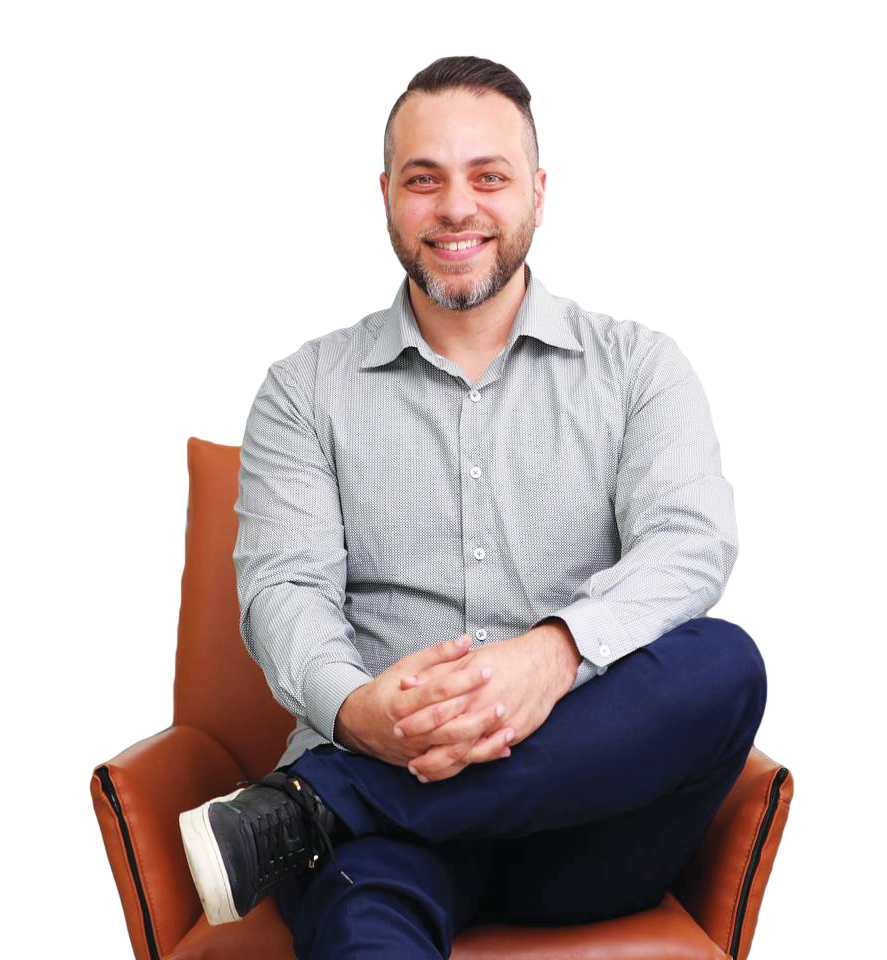
We’re growing increasingly fast. Our average growth rate is about 250 to 300 percent per year since we started in 2019 until 2022.
Mohannad Zikra
By all accounts, there is a lot of demand for such apartments and people are also willing to pay a premium for them.
He added: “By 2024 we are looking at adding around 5,100 units. And for that, we’re starting to look at strategic partners and investors in the region, especially investors that are backed by sovereign investment funds because we’re seeing that there’s a very close relationship between what we’re doing and what we can contribute toward a lot of the government initiatives from a housing perspective.
“You look at Saudi Arabia and Vision 2030, there is a huge plan to grow the population,” Zikra continued. “And with that, they have needs to add over 100,000 homes over the next three years. And this means that these homes are going to have to be rented out. And they’re looking for partners where they can simplify that process.”
This is where a company like Stella Stays comes in. “We want to come in as a professional furnished apartment operator where we can come in and provide that consistency that you get in a hotel and provide that service,” said Zikra.
Branded, tech-enabled experience
“We don’t just take single apartments but we actually work with real estate developers and we take over buildings,” Zikra said.
“When you book a furnished apartment at Stella Stays, you are coming into a fully managed, branded tech-enabled operator, where from the moment you walk into the building, it’s our brand,” he added.
“In all of the apartments that are managed by us we provide that same consistency where you know you’re going to get a clean place and you know there’s going to be 24/7 support for your stay, whether it’s for one night, one week or one month or more.”
To its credit, Stella Stays has digitized the whole guest journey. It has done much the same thing with home rentals that Uber did with ride-hailing. A lot of its guests and residents come to its app or website, see all the different apartments that they have across the different cities, and choose the one they want.
“They can then choose their dates and pay by credit cards or pay by crypto,” explained Zikra.
“Then after that, they receive information for them to check-in. We have smart door locks across all of our units and access. They find the place, they pay for it, they move in, they can request services and all this without having to ever deal with a person.”
He added: “There’s no need to deal with real estate agents, no need to pick up the phone and make calls. Instead, we have completely digitized the experience.”
Way forward
Asked who his competitors were, and pat came Zikra’s reply: “Our competitors today are nothing other than just traditional landlords who own properties and rent them out on Property Finder and all these different marketplaces or these building owners who want to rent out their apartment on their own. That’s what we want to take over.”
“And that’s why more than anything, we’re partnering up with them and saying, listen, we can take over your assets,” he explained. “Just like Amazon’s done with shopping goods, we can do that with furnished apartments.”
He added that they have entered a brand new space that they have termed “residential hospitality.” According to Zikra residential hospitality is the ability to rent a residential apartment in a branded way.
“We want to take over and become the biggest landlord globally with our concept of allowing people to just show up and start living,” he concluded.
CAIRO: UAE-based InvestSky has raised $3.4 million in a pre-seed funding round led by Saudi venture capital firm Emkan Capital with participation from other investors.
Established in 2021, InvestSky is a social investing platform tailored for the new generation of investors in the Middle East with the aim of making stock trading inclusive, intuitive and informed.
In an exclusive interview with Arab News, Nitish Mittal, CEO and co-founder of InvestSky, said that the company targets non-professional investors to solve their investment needs with a community-driven approach.
“Particularly across Gulf Cooperation Council countries the space is ripe for disruption, and we want to help a new era of investors to put their money to work,” Mittal told Arab News.
The platform allows users to buy fractional stocks starting from $1 on a commission-free basis and provides a social community for users to collaborate.
“We offer a freemium subscription-based model, where the premium plan comes with advanced features that help users make informed decisions,” Mittal explained.
He also added that users will be able to use the service for free which will encourage them to switch to the subscription after recognizing the value provided by the app.

“We want to take away the hurdles and perceived difficulties of investing and our ambition is to make investing seamless, intuitive and informed,” Mittal said.
He added: “We’re basing our business model on our deep understanding of what the new era of investors want which includes convenience, simplicity, collaboration and ease of use.”
Mittal aims to expand the company to the entire GCC region while enhancing the platform’s features and system to help users get access to the tools and information they need.
“When you bring people together you can create incredible opportunities for people to learn from one another and simultaneously we also see this as an opportunity for us to learn from our community,” he added.
Moreover, the startup managed to receive a category 4 license with retail endorsement from the Dubai Financial Services Authority.
The company also provides market intelligence data which will further empower investors to make more decisions aligned with Shariah compliance or social and environmental impacts.
“We intend to offer an empowering platform that helps educate our users to make sound investment decisions powered by socially connected tools that will help build a collaborative community in the region,” Mittal said.
The company also managed to get other Saudi investors on board including S3 Ventures, Al-Romazian Family Office and Mishal Al-Mishari, the deputy CEO of Saudi food delivery app Jahez.
Co-founder of InvestSky, Turki Al-Shaikh, stated that the number of non-professional investors using fintech solutions grew by more than 180 percent over the past year in Saudi Arabia alone.
“Beyond this, we see a big gap in financial inclusion, with female non-professional investors making up less than 27 percent of traders. We believe that educating our users is key to building a sustainable market by improving both financial literacy and inclusion,” Al-Shaikh explained.
CAIRO: Saudi Arabia-based edtech platform Faheem is planning to expand its regional presence in its effort to lead the online tutoring space.
Since its inception in 2018, Faheem has set out its goals to help students excel by providing them with qualified and competent teachers through its one-to-one tutoring platform.
In an exclusive interview with Arab News, Salem Ghanem, CEO and founder of Faheem, said that the company has managed to stand out as the leading one-stop shop for all academic needs.
“We’ve successfully become the destination for all parents and students looking to improve their grades, with our retentive and personalized services, our highest quality education and affordable prices,” Ghanem added.
He explained that Faheem’s vision is to be the leading supplementary education provider in the region by targeting all parents and students in the Saudi market.
“Faheem has positioned itself to be a major player in the tutoring market and is well positioned to grow further beyond the Kingdom. We are planning to expand our services to the nearby Gulf markets as a first step, followed by the remaining markets of the Middle East and North Africa region and then Pakistan,” Ghanem stated.
The company currently has over 50 staff members in its main office located in Riyadh and is on track to increase that number to 120 employees by the end of 2023.
“Faheem’s online tutoring model, easy-to-use mobile app, and personalized services allow us to scale and expand relatively easily by utilizing our tutors’ database that we have built over the years,” Ghanem said.
Faheem has been keen to positively impact the market by increasing the quality of education through high-standard tutor approvals and measuring student performance to update and adjust accordingly.
The company also managed to attract over 1,400 qualified Saudi tutors who managed to make a sustainable income from the platform.
“The edtech industry is likely to make a significant contribution to the Saudi economy, especially after the privatization of the education sector following the Kingdom’s Vision 2030, Ghanem said.
He added: “The impact will be apparent in the created job opportunities, and the decreasing unemployment rates, taking into consideration that the tutoring market could create an estimated 45,000 to 60,000 job opportunities.”
Faheem has over 350,000 students with more than 18 million minutes of lessons on its platform.
Last year, the company celebrated a tutor who made over SR1 million ($266,219) through the platform and is expecting to celebrate more tutors this year.
“In just January of 2023, the company experienced five times growth, and is set on a solid growth track, expecting to grow more than 10 times this year,” Ghanem stated.
He concluded by saying that the edtech industry is advancing towards inclusive and personalized services that encourage user engagement and Faheem is on track to utilize these formats to fill the gap in educational inclusion.
The company secured several undisclosed funding rounds from notable investors like Saudi Aramco’s Wa’ed Ventures and is set to announce another investment round in the near future.
AMMAN: Jordan and Saudi Arabia will discuss ways to expand economic relations and build joint industrial partnerships during a Jordanian delegation’s visit that started on Saturday.
The delegation, led by Amman Chamber of Industry chief Fathi Jaghbir, includes representatives of industrial companies operating in a range of production sectors.
The visit has been organized by the ACI, and will include Jeddah, Makkah and Madinah, Jordan’s News Agency reported on Saturday.
In a statement, the ACI said that the delegation’s weeklong visit will include the Makkah Expo for Hotels and Restaurants, which is due to open on Tuesday.
Jaghbir highlighted the importance of strengthening Jordanian-Saudi economic relations and increasing trade exchanges, which totalled $4.2 billion in 2021, in light of the “distinguished, brotherly” bilateral relations in various fields.
“The visit comes as a continuation of the previous successful visit last year, which saw joint business meetings with Saudi businesspeople in Riyadh, Jeddah, Dammam and Makkah, during which memoranda of understanding and cooperation were signed between Jordan and Amman chambers of industry and commerce chambers in these Saudi cities.”
He praised the Jordanian Embassy in Riyadh, the Federation of Saudi Chambers, and heads of commerce chambers in Jeddah, Makkah and Madinah for facilitating the visit.
